Test a robot joint actuator
A datasheet says what an actuator should do. These tests say what yours does. Nine measurements, in the order you run them, and the bench that runs them at three budgets.
China has a national standard for integrated robot joints, GB/T 43200-2023, in force since April 2024, plus reducer standards (GB/T 35089, GB/T 30819). Outside China there is none: motor standards (IEC 60034) cover only the motor, and most joints ship tested against nothing. This protocol strings together the methods robotics labs publish and the items GB/T 43200 names, so results from different benches can be compared.
The bench
- Actuator under testRuns in torque (current) control.
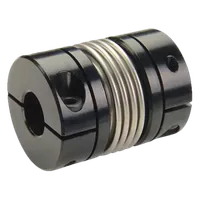
- CouplingBellows or jaw; takes up misalignment.
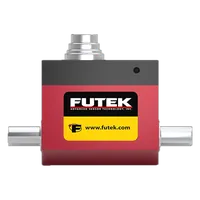
- Torque sensorInline rotary for running tests; reaction sensor when the output is locked.
- Coupling
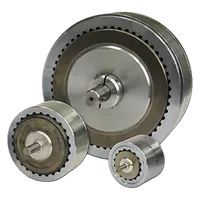
- LoadA second actuator in speed control (most common, works in all four quadrants), or a powder or hysteresis brake (cheaper heat sink, cannot drive the actuator backwards).
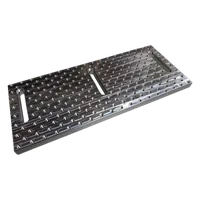
Everything bolts to one fixture plate. For locked-output tests, swap the load for a fixture that holds the output to a reaction torque sensor.
The tests, in the order you run them
Winding resistance, inductance and back-EMF
Whether the motor matches its datasheet before anything is assembled around it, and the numbers your driver needs.
Measure phase-to-phase resistance and inductance with an LCR meter. Spin the motor unpowered (a drill works) and read phase voltage on a scope to get the back-EMF constant.
Torque per amp and saturation
Real output torque for a given current, and where it stops rising linearly. Usually the first place a joint falls short of its datasheet.
Lock the output to a reaction torque sensor. Step the current from zero to peak in both directions and fit a line; note where the fit breaks.
Backlash, lost motion and torsional stiffness
How much the output moves before it carries load, and how far it twists under load. Matters most for strain-wave and cycloidal joints.
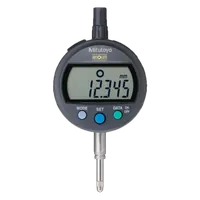
Lock the input side. Apply torque to the output in steps (+, 0, −, 0) and read output angle with a high-resolution encoder or a dial indicator on a torque arm. The loop gives backlash (width at zero torque), lost motion and stiffness (slope).
Friction, breakaway and backdrive torque
How much torque it takes to start the joint moving from the output side. Low backdrive torque is what makes a leg compliant on impact.
With the actuator unpowered, drive its output slowly with the load and record the torque to start and keep it moving. Repeat at several speeds to get a damping value.
Torque ripple and cogging
How smooth the torque is over a revolution. Ripple shows up as vibration and poor force control.
Hold a constant current while the load turns the output just over one revolution very slowly (about 0.01 Hz). Log torque against position; report peak-to-peak and standard deviation.
Torque-speed curve and efficiency map
The real operating envelope, and how much input power becomes output work at each point.
Step through a grid of torque and speed points in all four quadrants, holding each long enough to settle. Record DC input power and shaft output power (torque × speed).
Heating and continuous torque
How long the joint holds a given torque before the windings hit their limit. Rated torque on most datasheets assumes a heat sink you may not have.
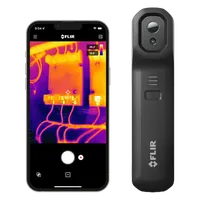
Calibrate winding temperature against resistance once with a thermal camera. Then run power steps and fit a two-stage thermal model to get thermal resistance, time constants and continuous torque.
Torque bandwidth
How fast the joint can follow a torque command, which bounds how stiff and responsive your controller can be.
Apply current steps and a band-limited random current command with the output locked. Fit a transfer function from command to measured torque; run once without the actuator to remove the bench's own dynamics.
Endurance on a real duty cycle
Whether backlash, friction and efficiency hold up. Wear shows here first.
Play back torque and speed recorded from your robot (a gait cycle, a pick motion) for 24 to 60 hours, then repeat the backlash, friction and efficiency tests.
Buy the bench
Prices are what each cited page showed on its date. Totals add listed parts only; the rest are quote-only. You will also need the actuator you are testing and a second one, or a brake, as the load.
Starter bench
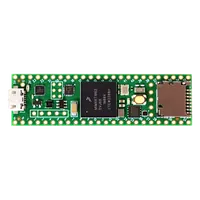
The back-to-back bench most small teams build. A reaction sensor under the load joint's housing reads shaft torque at steady state; a dial indicator on a torque arm reads backlash. Data comes in through an HX711 at roughly 80 samples a second, too slow for bandwidth.
Runs: Torque per amp and saturation, Backlash, lost motion and torsional stiffness, Friction, breakaway and backdrive torque, Torque ripple and cogging, Torque-speed curve and efficiency map, Heating and continuous torque, Endurance on a real duty cycle
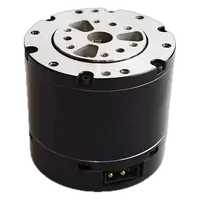
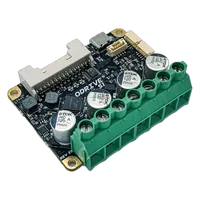
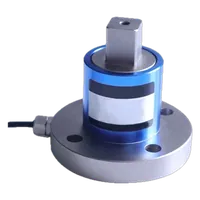
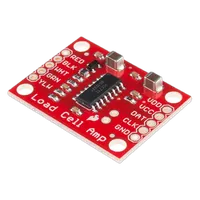
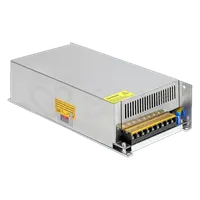
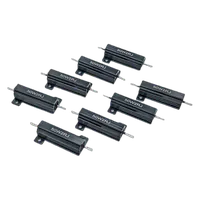
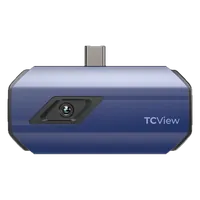
Serious bench
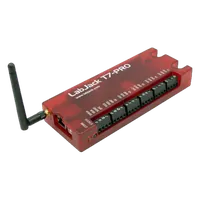
Adds an inline rotary torque sensor, a powder brake as a second load, a fast data logger, and the meters for the electrical tests. Covers all nine tests. Take DC input power from the driver's bus-current reading, or add a power analyzer from the lab kit.
Runs: Winding resistance, inductance and back-EMF, Torque per amp and saturation, Backlash, lost motion and torsional stiffness, Friction, breakaway and backdrive torque, Torque ripple and cogging, Torque-speed curve and efficiency map, Heating and continuous torque, Torque bandwidth, Endurance on a real duty cycle
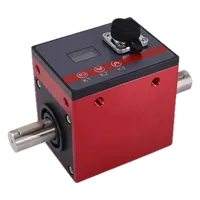
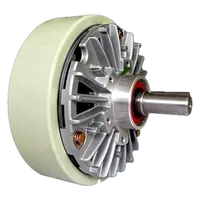
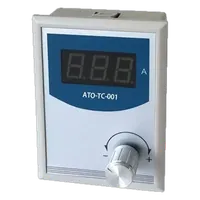
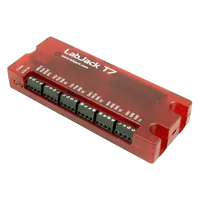
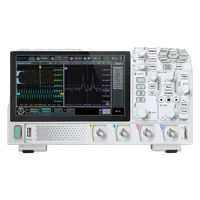
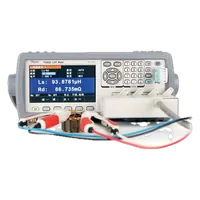
Lab bench
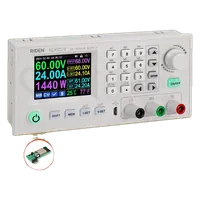
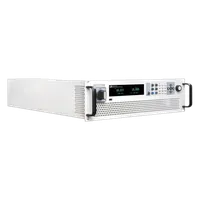
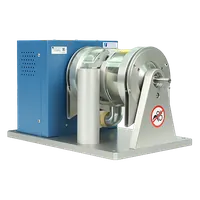
Instrument-grade torque and power measurement and a regenerative supply that takes back the load's energy. Most of it is sold on quote. If you would rather not build at all, complete joint test systems are under Complete Test Benches below.
Runs: Winding resistance, inductance and back-EMF, Torque per amp and saturation, Backlash, lost motion and torsional stiffness, Friction, breakaway and backdrive torque, Torque ripple and cogging, Torque-speed curve and efficiency map, Heating and continuous torque, Torque bandwidth, Endurance on a real duty cycle
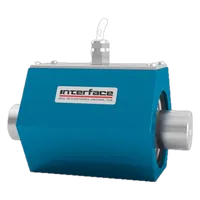
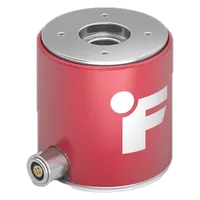
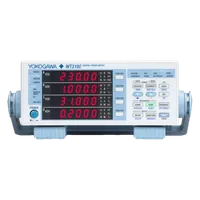
All test equipment
Every sensor, load and instrument in the catalog, with specs and sourced prices.
Standards that cover part of it
- GB/T 43200-2023 Performance and test methods for integrated (mechatronic) robot joints: the closest thing to a whole-joint standard. Includes torque and speed ripple, vibration, impact and noise; test supply within ±10% of rated voltage, instruments class 0.5 or better. In force April 1, 2024.
- IEC 60034-2-1 Motor losses and efficiency by direct torque measurement. Written for mains machines; partial fit for driver-fed BLDC.
- GB/T 35089-2018 Test methods for robot precision reducers (harmonic, cycloidal, RV): efficiency, transmission accuracy, stiffness, lost motion, starting and backdrive torque, life.
- GB/T 30819-2024 Harmonic reducers for robots, including the stiffness hysteresis curve and no-load starting torque.
- ISO 9283 Whole-robot pose accuracy and repeatability, not single joints.
Open-source benches to start from
Ran these tests? Send the numbers and a photo of your bench. Measured results are what this protocol is for: we want to show them next to each part's datasheet values.
Send your results